IT
IT EN
EN FR
FR ES
ES PT
PTThe Definitive Guide to Synthetic Tennis Court Maintenance
Keep your synthetic tennis court pristine and extend its life with our comprehensive maintenance guide. Read all.
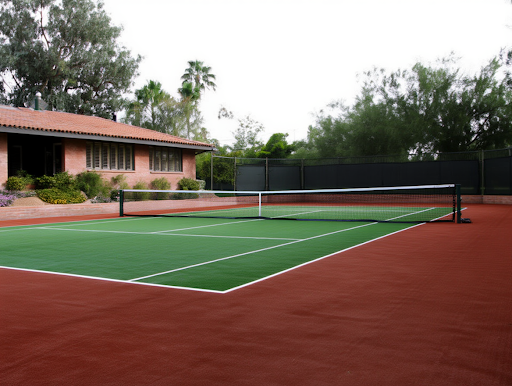
Synthetic tennis courts offer durability and consistent play, but like any investment, they require diligent maintenance to preserve performance, safety, and appearance. Neglecting proper care can lead to premature wear, reduced playability, and costly repairs. This guide provides a comprehensive overview of how to maintain your synthetic tennis court, ensuring it remains in top condition for years to come.
Why regular maintenance is crucial
Investing in a synthetic tennis court is significant — and regular maintenance is essential to maximize that investment. Beyond aesthetics, consistent care offers multiple benefits:
- Extend court lifespan — Proper maintenance prevents premature degradation of surface fibers and infill, significantly extending the court’s life and delaying the need for resurfacing or replacement.
- Optimize playability and safety — A well-maintained court ensures consistent ball bounce, true roll, and optimal traction. It also minimizes hazards such as slippery surfaces or damaged seams.
- Preserve aesthetic appeal — Routine cleaning keeps the court vibrant and inviting, free from moss, algae, weeds, and debris.
- Prevent costly repairs — Addressing minor issues promptly prevents them from becoming major, expensive problems.
Understanding your synthetic tennis court
Before maintaining your court, it’s important to understand its structure and materials.
Types of synthetic courts
- Artificial grass / turf: synthetic fibers with sand or rubber infill for cushioning.
- Acrylic courts: hard, multi-layered surfaces applied over asphalt or concrete.
- Cushioned acrylic courts: acrylic with rubber layers for improved comfort and reduced impact.
Key components
- Surface fibers/layers: The visible playing surface.
- Infill: Sand, rubber, or blends that provide stability and cushioning.
- Base: Asphalt, concrete, or crushed stone providing structure and drainage.
- Drainage system: Prevents puddles and water damage.
Comprehensive maintenance checklist
Effective maintenance combines regular tasks with periodic deep cleaning.
Daily / Weekly Tasks
- Sweep or blow debris: Use a broom or leaf blower to remove debris.
Frequency: Daily (for high-use courts) or weekly.
Why: Prevents organic matter buildup and maintains playability. - Spot clean spills: Use water and mild pH-neutral cleaner for stains.
Why: Prevents permanent marks and maintains hygiene.
Monthly / Quarterly Tasks
- Brush and redistribute infill: Use a stiff broom or power brush.
Why: Keeps infill even, maintains bounce, and revives fibers. - Weed & moss control: Inspect and treat as needed with eco-friendly products.
Why: Prevents structural damage and slippery areas. - Inspect for damage: Check seams, cracks, or wear spots.
Why: Early detection avoids expensive repairs.
Annual / bi-annual professional maintenance
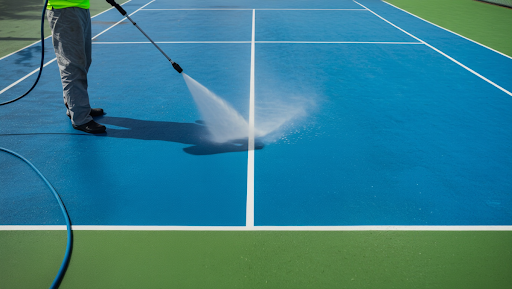
- Deep Cleaning: Professional power brushing or washing.
Why: Removes ingrained dirt and restores appearance. - Infill Assessment & Top-Up: Professionals check and refill if needed.
Why: Ensures proper cushioning and fiber support. - Drainage Inspection: Confirm outlets are clear and functional.
Why: Prevents standing water and algae. - Seam & Line Repair: Professional touch-ups as required.
Why: Maintains court integrity and visibility.
Common problems and solutions
- Algae and moss: cause: damp, shaded areas — solution: remove manually, apply a pH-neutral algaecide, and improve drainage.
- Infill compaction: cause: heavy use, lack of brushing — solution: regular brushing and professional redistribution.
- Stains: organic: use mild soap and water — oil/grease: absorb with litter, then clean gently — rust: use a dedicated rust remover for synthetic surfaces.
- Surface fading: cause: UV exposure and heavy use — solution: gentle cleaning, avoid harsh chemicals, rotate play zones
DIY vs. professional maintenance
- When to DIY: tasks like sweeping, debris removal, and spot cleaning can be done regularly by owners or staff
- When to hire professionals: deep cleaning, infill management, and drainage inspections should be handled by specialists with proper tools
- Choosing the right service: proven experience in synthetic court maintenance - appropriate equipment and eco-friendly products - references and insurance coverage.
Not a tennis court? Read our Synthetic turf maintenance guide!
Essential tools & products
- Brushes/Brooms: Soft for cleaning, stiff for infill redistribution.
- Leaf Blower or Vacuum: For quick debris removal.
- pH-Neutral Cleaners: Gentle on synthetic materials.
- Algaecides & Moss Killers: Non-toxic and biodegradable.
- Hose with Nozzle: For rinsing surfaces.
Long-term care tips
- Maintain a consistent schedule.
- Educate users on proper footwear and court etiquette.
- Restrict heavy equipment from accessing the court.
- Monitor and clean drainage channels regularly.
- Consider a professional maintenance contract for reliability.
FAQ
1. How often should I clean my court?
Daily or weekly cleaning, monthly brushing, and annual professional maintenance are ideal.
2. Can I use a pressure washer?
Avoid high-pressure washing — it can damage fibers and infill. Opt for gentle rinsing or professional cleaning.
3. When does my court need professional maintenance?
If you notice uneven infill, moss growth, seam damage, or poor drainage, it’s time for expert care.
4. Is infill essential?
Yes — it supports the fibers, ensures bounce, and provides cushioning. Professionals can top it up as needed.
5. How can I prevent moss and algae?
Ensure proper drainage, sunlight exposure, and regular debris removal. Use eco-safe moss prevention treatments periodically.
A synthetic tennis court is a long-term investment. With consistent care, regular inspections, and timely professional maintenance, you can ensure a safe, high-performing, and visually appealing surface for years of play.
Contact us to have more information about our synthetic tennis court maintenance!
- Via Crusnigo, 11
- 24030 Villa d'Adda (Bergamo)
- VAT number: IT01640880165
- Cod. Fiscale 07075130158
- Cod. Destinatario SUBM70N
- Shared capital: € 5,000,000
- REA BG 214799
- Phone number: +39 (035) 784-178
- Fax: +39 (035) 784-144
- Email: contact@italgreen.it
- PEC: italgreen@mailcertificata.org
- CLICK HERE to Whistleblowing

- Padel
- Artificial lawn
- Padel courts: benefits, construction and installation
- Build a tennis court: the complete guide by Italgreen
- Artificial grass manufacturers and suppliers
- Synthetic grass tennis court: benefits and supply
- Padel
- Artificial grass for sports
- Artificial grass manufacturers
- Sports artificial grass
- Synthetic grass manufacturer
- Italgreen: golf turf manufacturers and suppliers since 1983
- NEW LIMITED EDITION PADEL COURTS
- Padel court manufacturers: why choose Italgreen
- Sports turf manufacturers since 1983
- Indoor padel courts
- Italgreen’s synthetic soccer field
- The steps to replace the synthetic grass for padel
- Hybrid Turf
- High-quality artificial sports turf manufacturer
- Padel court supplier
- Artificial grass factory: Italgreen is at your disposal
- Soccer turf installation: a guide by Italgreen
- Padel court maintenance
- Synthetic Turf Suppliers
- Padel court builder: Italgreen is the solution
- Comprehensive guide to synthetic soccer turf: benefits, installation, and maintenance
- Field hockey turfs: a comprehensive guide
- Padel Court Design, Project, and Installation
- Artificial football turf